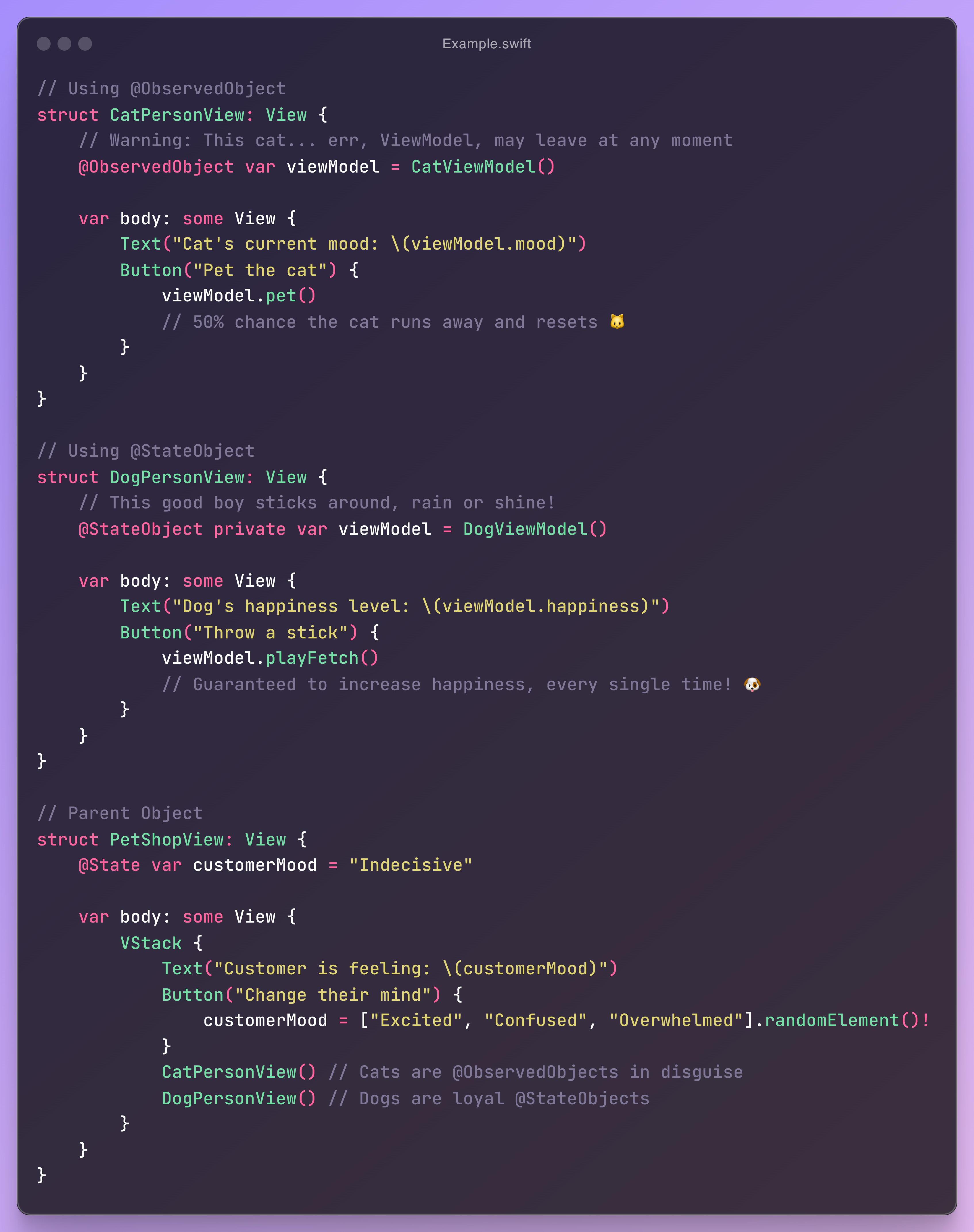
@StateObject vs @ObservedObject
Confused about when to use @StateObject or @ObservedObject? Let's unravel this mystery with a tale of cats and dogs! 🐱🐶

😱 The Problem: Using @ObservedObject for locally created view models can lead to unexpected resets. It's like trying to pet a cat - sometimes it's there, sometimes it vanishes!
🎉 The Solution: @StateObject keeps your view model as loyal as a dog, sticking around no matter how many times the view redraws.
🧠 Key Takeaways:
1️⃣ Use @StateObject when you create the ObservableObject inside the view
2️⃣ Use @ObservedObject for objects passed into the view
3️⃣ @StateObject ensures object lifecycle tied to the view lifecycle
4️⃣ @ObservedObject assumes external lifecycle management
💡 Pro Tips:
· @StateObject is like a lazy var for ObservableObjects in SwiftUI
· Only use @StateObject in one place to avoid lifecycle conflicts
· @Published properties auto-trigger view updates (or use objectWillChange.send() manually)
🚀 Remember: @StateObject saves you from unexpected resets in complex view hierarchies!
Found this enlightening? Let's connect and explore more SwiftUI intricacies!
hashtag#SwiftUI hashtag#iOSDev hashtag#StateObject hashtag#ObservedObject hashtag#CodingTips